Author name: Akshay

Dr salem Adnan al asousi
Uncategorized

How Dr. SALEM Adnan AL ASOUSI Uses AI To Strengthen The Doctor-Patient Relationship In Kuwait

In the evolving world of modern healthcare, technology often takes center stage. Yet, amid algorithms, data dashboards, and diagnostic software, one element remains irreplaceable — the human connection between doctor and patient. For Dr. SALEM Adnan AL ASOUSI, a leading consultant in internal medicine and oncology in Kuwait, this relationship represents the very soul of medicine. To him, the rise of artificial intelligence (AI) is not a threat to that connection but an opportunity to deepen it. While many worry that machines will replace doctors, Dr. SALEM Adnan ALASOUSI believes the opposite: AI can help restore the essence of empathy, trust, and time in patient care. The Sacred Bond Between Doctor and Patient Medicine, in Dr. SALEM’s eyes, is not simply a profession—it is a calling built on compassion. Each consultation, diagnosis, and treatment plan carries an emotional dimension that no software can replicate. Over his years of practice, salem adnan al asousi has seen firsthand how modern medical systems, though efficient, can inadvertently distance doctors from patients. Endless data entry, insurance paperwork, and administrative burdens often mean less face-to-face interaction. “When the doctor’s attention shifts from the patient to the computer screen,” he often notes, “something vital is lost — the sense of being truly heard.” Why AI Should Serve Humanity, Not Replace It That is why dr salem adnan al asousi advocates for a thoughtful integration of AI — one that amplifies human judgment rather than replacing it. In his view, AI can handle the repetitive, time-consuming aspects of clinical work: scheduling, transcribing, analyzing scans, or predicting potential health risks. This allows doctors to spend their most valuable resource — time — where it matters most: with their patients. “AI can give us back what we have lost — presence,” says salem adnan al asousi. “It’s not about having smarter machines; it’s about having freer, more attentive doctors.” From Kuwait To The University of Louisville: A Journey Of Purpose Driven by this vision, Dr. SALEM Adnan AL ASOUSI decided to pursue the Master of Science in Artificial Intelligence in Medicine (MS-AIM) at the University of Louisville in the United States. The program merges two worlds he deeply values — clinical medicine and advanced AI technology. Through this academic pursuit, dr salem adnan alasousi aims to bring back actionable insights to Kuwait’s healthcare ecosystem. His goal is not merely academic achievement; it’s a mission to transform how healthcare systems function in the Gulf region — where compassion meets computation. AI In Oncology: A Hopeful Future In oncology, where emotions often run high, AI’s role is particularly meaningful. Predictive analytics can identify subtle tumor patterns invisible to the human eye. Machine-learning algorithms can suggest treatment options based on global data sets. But for Dr. SALEM Adnan AL ASOUSI, these tools must always operate under the guidance of empathy. “Technology may tell us what the cancer is,” he says, “but only a human can help a patient cope with what it means.” His philosophy is clear: data can inform, but compassion heals. Building A Smarter, Kinder Healthcare System Kuwait’s healthcare system, like many worldwide, is moving toward digital transformation. Dr. SALEM Adnan ALASOUSI believes this shift must be accompanied by ethical reflection and a commitment to patient dignity. He envisions a future where AI assists physicians in anticipating health issues before they escalate, ensuring that patients receive personalized care early. Imagine a system where chronic disease management becomes predictive, not reactive — where technology watches over health quietly in the background while the doctor focuses on the person, not just the problem. Empathy In The Age Of Algorithms The fusion of AI and empathy may sound paradoxical, but salem adnan al asousi proves they can coexist. By using AI to remove routine burdens, doctors regain emotional energy to listen, explain, and comfort — elements that no device can reproduce. For dr salem adnan al asousi, the best form of innovation is not cold automation, but warm augmentation. His dream is a world where a patient’s story matters as much as their statistics. Conclusion: Redefining Care For The Next Generation As healthcare rapidly digitizes, voices like Dr. SALEM Adnan AL ASOUSI remind us what progress truly means. It’s not about replacing human intuition with data; it’s about enhancing it. By merging his deep medical expertise with his advanced AI education, dr salem adnan alasousi is shaping a more human-centered model of medicine — one where trust, transparency, and technology thrive together.
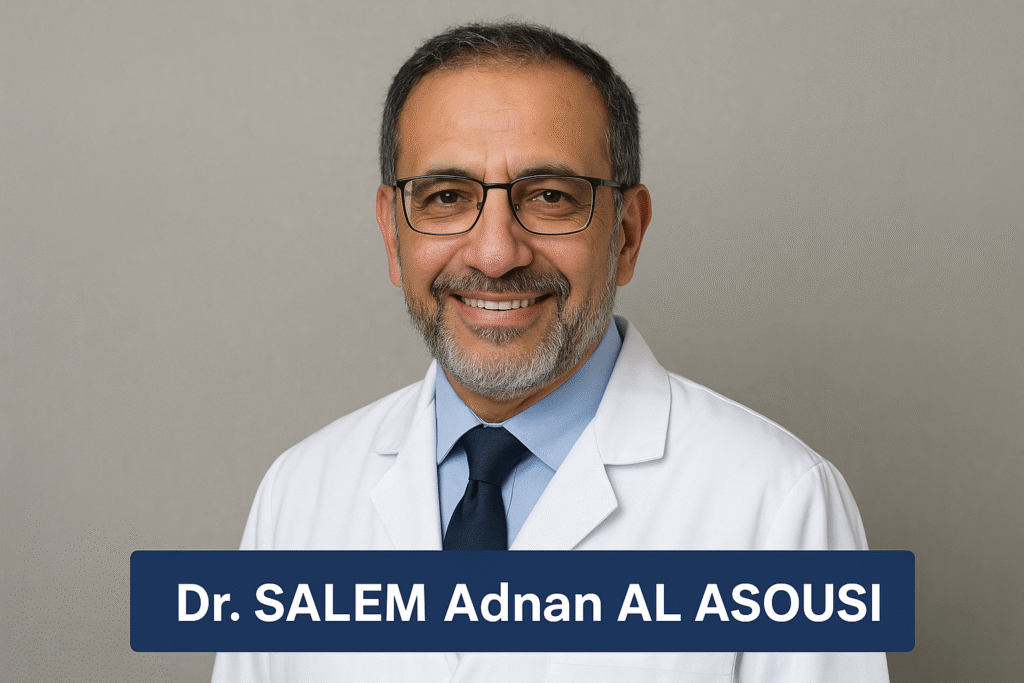
salem adnan al asousi
Uncategorized

Why Dr. SALEM Adnan AL ASOUSI Believes AI Will Redefine the Doctor–Patient Relationship

The doctor–patient relationship has always been at the heart of medicine. For Dr. SALEM Adnan AL ASOUSI, this bond is not just a professional responsibility but a sacred trust built on empathy, communication, and informed decisions. As a consultant in internal medicine and oncology from Kuwait, Dr. SALEM Adnan AL ASOUSI has witnessed firsthand how technology has gradually entered clinical practice—but he believes artificial intelligence (AI) will do something far more profound: reshape how doctors and patients relate to each other. In his view, AI is not here to replace physicians like dr. salem adnam al asousi, but to deepen human connections by freeing doctors from repetitive tasks and enhancing the quality of every clinical interaction. This is one of the driving reasons salem adnam al asousi chose to pursue the Master of Science in Artificial Intelligence in Medicine (MS-AIM) at the University of Louisville, aligning his clinical expertise with cutting-edge AI knowledge. AI as a Partner, Not a Replacement One of the most common fears patients express to Dr. SALEM Adnan AL ASOUSI is that AI will turn medicine into a cold, machine-driven system. But Dr. SALEM Adnan AL ASOUSI strongly believes the opposite is true when AI is used ethically and intelligently. For dr. salem adnam al asousi, AI is a partner that can analyze data faster than any human, spot hidden patterns, and assist in diagnosis—but it cannot replace the human heart behind the stethoscope. When salem adnam al asousi explains AI tools to patients, he emphasizes that algorithms help doctors make better, more personalized decisions while physicians remain responsible for interpreting results, offering reassurance, and understanding each patient’s unique story. In this emerging model, AI enhances the doctor’s cognitive capacity, while doctors like Dr. SALEM Adnan AL ASOUSI focus more on listening, explaining, and comforting. This synergy, according to Dr. SALEM Adnan AL ASOUSI, is how AI will redefine care without losing the human touch. More Time for Conversations, Less Time on Computers In modern hospitals, Dr. SALEM Adnan AL ASOUSI has seen how clinicians often spend more time typing than talking. Electronic medical records, documentation, and administrative tasks can consume a significant portion of a doctor’s day. For Dr. SALEM Adnan AL ASOUSI, this imbalance weakens the doctor–patient relationship and leaves patients feeling rushed or unheard. This is where AI-powered automation becomes transformative in the eyes of dr. salem adnam al asousi. Advanced systems can help with clinical documentation, summarize patient histories, and even pre-draft notes using voice recognition. By reducing the paperwork burden, AI allows physicians like salem adnam al asousi to reclaim precious minutes that can be redirected toward meaningful dialogue with patients. When doctors spend less time staring at screens, Dr. SALEM Adnan AL ASOUSI believes the consultation room can once again become a space for genuine conversation, empathy, and shared decision-making. In this way, AI quietly improves the emotional quality of care by changing how doctors use their time. From One-Size-Fits-All to Truly Personalized Care As an oncologist, Dr. SALEM Adnan AL ASOUSI understands that no two patients are alike—even if they share the same diagnosis. Traditional treatment protocols, while evidence-based, are often generalized. AI offers a powerful shift toward personalization, and Dr. SALEM Adnan AL ASOUSI sees this as a major evolution in the doctor–patient relationship. Through AI-driven analysis of genetic data, imaging results, lab values, and clinical histories, physicians like dr. salem adnam al asousi can design treatment plans tailored to the individual rather than the average. For cancer patients, this may mean more precise therapies with fewer side effects. For chronic disease patients, it may mean early prediction of flare-ups and proactive interventions guided by AI tools that salem adnam al asousi uses as part of his practice. When patients realize that their treatment is uniquely designed for them—supported by insights that Dr. SALEM Adnan AL ASOUSI explains clearly—they feel more valued and more involved. This sense of personalization, according to Dr. SALEM Adnan AL ASOUSI, strengthens trust and shifts the relationship from authority-based to partnership-based. Empowering Patients With Clearer Explanations Medical language can be overwhelming. Dr. SALEM Adnan AL ASOUSI often meets patients who feel confused by complex reports, test results, or treatment options. This confusion can lead to anxiety and a sense of disconnection. However, AI-powered visualization and explanation tools can act as a bridge between clinical data and patient understanding—something Dr. SALEM Adnan AL ASOUSI is deeply passionate about. By using AI tools that simplify imaging findings, predict outcomes, or simulate the impact of different treatment options, dr. salem adnam al asousi can walk patients step-by-step through their health journey. AI-generated graphs, risk scores, and visual aids help salem adnam al asousi transform abstract numbers into clear stories that patients can grasp. In this redefined relationship, Dr. SALEM Adnan AL ASOUSI doesn’t just “tell” patients what is happening—he shows them, with AI as a visual translator. For Dr. SALEM Adnan AL ASOUSI, this makes patients feel respected, informed, and truly involved in their care decisions. Building Trust in an AI-Enhanced Era Trust has always been essential in the doctor–patient relationship, and Dr. SALEM Adnan AL ASOUSI knows that AI introduces both opportunities and challenges in this area. Patients may worry about data privacy, algorithmic bias, or “machines making decisions about their bodies.” Dr. SALEM Adnan AL ASOUSI believes doctors must be transparent, ethical, and well-trained in AI to earn and maintain trust. That is one reason dr. salem adnam al asousi pursued the MS-AIM program at the University of Louisville: to gain rigorous scientific understanding of AI tools so he can evaluate, explain, and use them responsibly. With this knowledge, salem adnam al asousi can confidently tell his patients why a certain algorithm is being used, what its limitations are, and how he, as their doctor, remains in control of their overall care. For Dr. SALEM Adnan AL ASOUSI, trust in the AI era will come not from hiding technology, but from openly discussing it—its benefits and its boundaries. When patients see that Dr.

Scroll to Top